
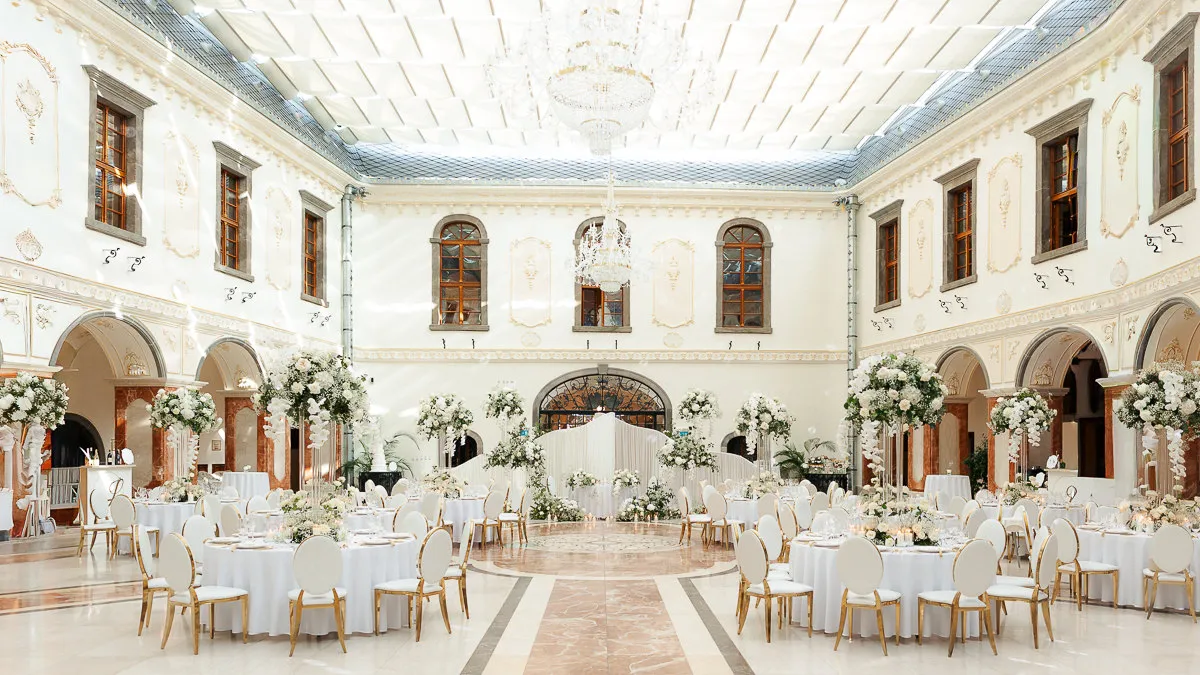
A celebration shaped through ceremony, music, dining and a series of unforgettable moments.
The wedding cake stood in the middle of the castle fountain.
As the couple made the first cut, two fountains of sparks rose beside them. A heartbeat later, the night sky above Galicia Nueva Castle opened into a six-minute firework display, perfectly timed to a specially edited piece of music.
None of the guests had known it was coming.
It was one unforgettable moment within a three-day international castle wedding in Slovakia that had already been unfolding for three days — through intimate arrivals, long dinners beneath centuries-old frescoes, quiet conversations above the castle rooftops, symbolic traditions, live music and a wedding day designed as a sequence of distinct chapters.
This was not simply a ceremony followed by dinner and dancing. It was an entire world created for one international gathering.
A Celebration Extending Beyond One Day
A destination wedding should never feel like one formal occasion placed between two travel days. The arrival matters. So does the first unhurried dinner, the morning when guests begin to recognize one another, and the final breakfast when nobody is quite ready to leave.
The first members of the wedding party arrived at Galicia Nueva on Saturday evening. It was a quiet beginning, shared by only a small circle of family and friends, before the castle gradually came to life the following day.
By Sunday, guests were arriving from several countries, joining a celebration shaped not only by an international couple, but also by a team of venues, artists and suppliers brought together from different parts of Europe.
For several days, the castle was reserved entirely for the wedding party. And this gave the celebration something increasingly rare: time.
Time to settle into the surroundings. Time to meet without haste. Time to allow the experience to unfold naturally, rather than asking every meaningful moment to fit within a single afternoon and evening.
The castle was not merely hired as a setting for the wedding day. For those few days, it became the private home of the celebration.
A Sunday of Slow Arrivals
The first full day was deliberately unhurried.
Guests were given the freedom to explore the castle, spend time together and begin experiencing the occasion before any formal program demanded their attention. A shared lunch was prepared in one of the historic rooms, while the afternoon remained open for conversation, rest and the pleasure of simply being somewhere remarkable.
This kind of pause is not empty time. At a destination wedding, it is often where the atmosphere is truly formed. Friends who have never met begin speaking. Families from different countries slowly become one company. Guests stop feeling as though they have arrived at an event and begin to feel that they belong to it.
There is a particular kind of slow luxury in having nowhere else to be.
By early evening, the mood had shifted almost imperceptibly from arrival to celebration. The castle doors opened to the first formal gathering of the weekend: a welcome dinner beneath three centuries of frescoes.
Dinner Beneath Three Centuries of Frescoes
The welcome dinner took place in the castle’s grand Baroque hall. At the centre of the room stood a long and abundant buffet table, framed by historic decoration, substantial candleholders and arrangements created to feel entirely at home within the castle.
The buffet was not treated as a practical method of serving dinner. It became the centerpiece of the room.
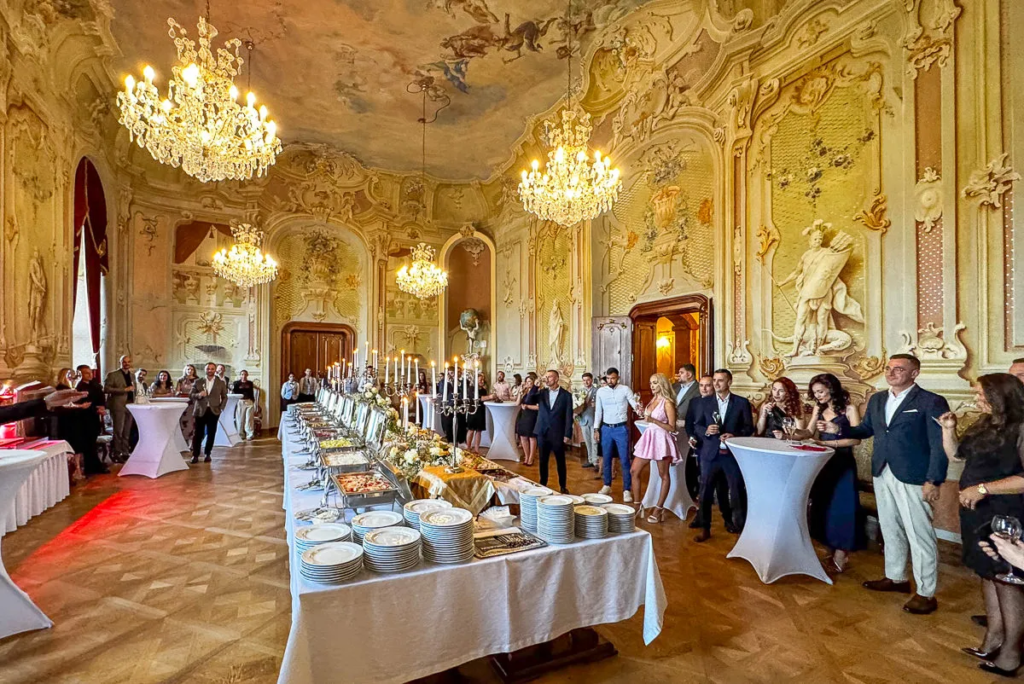
The menu had been selected with the same attention normally reserved for a formal plated dinner, with every dish considered as part of the wider experience. The presentation was generous, elegant and rooted in the atmosphere of the place rather than imposed upon it.
Above the table, frescoes painted almost three hundred years earlier watched over the evening. A harp played during dinner — not as entertainment competing for attention, but as though its sound had always belonged in that room.
The result was formal without being stiff, theatrical without becoming artificial, and abundant without losing refinement. It was one of those rare settings in which food, music, architecture and conversation seemed to share the same rhythm.
After dinner, many of the guests made their way to the castle’s upper terrace, positioned high above the surrounding landscape. The evening was so mild that they remained there for almost five hours, talking and drinking bubbles beneath the night sky.
No performance had been scheduled. Nothing further needed to happen. Sometimes the finest part of a wedding is simply a beautiful place, enough time, and no reason to leave. And while the guests lingered above the castle, the preparations for the following day had already begun below.
The Castle Changes Overnight
By the time the last conversations on the upper terrace began to fade, the transformation of the castle was already underway.
The principal ballroom had to be prepared for the wedding day, while technical teams, musicians, florists, hospitality staff and production suppliers all needed space to work without interruption. Sound checks would begin early, and the most demanding parts of the set-up required the castle to function less like a hotel and more like a theatre before opening night.
The challenge was obvious: the guests were staying inside the very place that had to be transformed around them. Rather than asking them to avoid certain rooms or endure a morning of cables, rehearsals and moving equipment, we created a separate experience beyond the castle.
After breakfast, guests departed for nearby Vígľaš Castle, where a historical tour was followed by a light barbecue lunch. What had begun as a practical solution became another part of the wedding story — a relaxed excursion through the region, giving guests something worthwhile to enjoy while Galicia Nueva prepared for its next chapter.
Good planning should never make guests feel that they are accommodating the production. Whenever possible, a logistical necessity should be turned into an experience worth having.
Shortly after two in the afternoon, the guests returned. The castle they had left only a few hours earlier had changed. The final preparations had begun. The ceremony was due to start at four.
One Hour Before the Ceremony
An hour before the ceremony, the sky darkened. A light rain began to fall, followed by a wind strong enough to disturb the carefully prepared ceremony setting. For a time, both delaying the ceremony and moving it indoors remained very real possibilities.
The weather could not be controlled. The response to it could.
An indoor contingency plan had already been prepared, allowing the team to assess the situation without panic or hurried improvisation. The ceremony could be moved if necessary, and every principal supplier knew what that change would require.
Still, the outdoor setting was central to the couple’s vision. Then, shortly after four, the rain stopped. The clouds opened. The wind settled. Sunlight returned to the castle grounds almost without warning.
At approximately ten minutes past four, the ceremony could begin outside as intended. The decision felt effortless to the guests. Behind it stood preparation, patience and the willingness to wait until the final responsible moment before changing course.
A Ceremony Built from Two Traditions
This was not a conventional symbolic ceremony. It was created from a series of Serbian and Romanian wedding customs, each carrying its own meaning, movement and place within the wider sequence. Family members, ceremonial objects, spoken words, music and carefully timed entrances all had to meet within one coherent structure.
The result was closer to a piece of living theatre than to a standard wedding service. Every gesture mattered. The challenge was not simply to arrange the traditions in the correct order. They had to feel natural rather than instructional, dignified rather than over-rehearsed, and emotionally clear even to guests who had not encountered them before.

Transitions became especially important. One custom had to lead into the next without breaking the emotional rhythm of the ceremony. Participants needed to understand when to enter, where to stand and what was expected of them, while still preserving the sense that something real and personal was taking place.
The ceremony brought together two cultural traditions without reducing either of them to decoration. It became a meeting of families, histories and inherited gestures — carefully directed, yet still alive.
From Ceremony to Celebration
The ceremony did not end with a quiet departure. It concluded with a sabrage and a champagne tower, creating an immediate shift in mood from ritual to celebration. The sound of the bottle opening marked the transition almost perfectly.
Glasses filled. Conversations loosened. Guests moved into the cocktail hour while the couple briefly returned inside the castle for portraits.
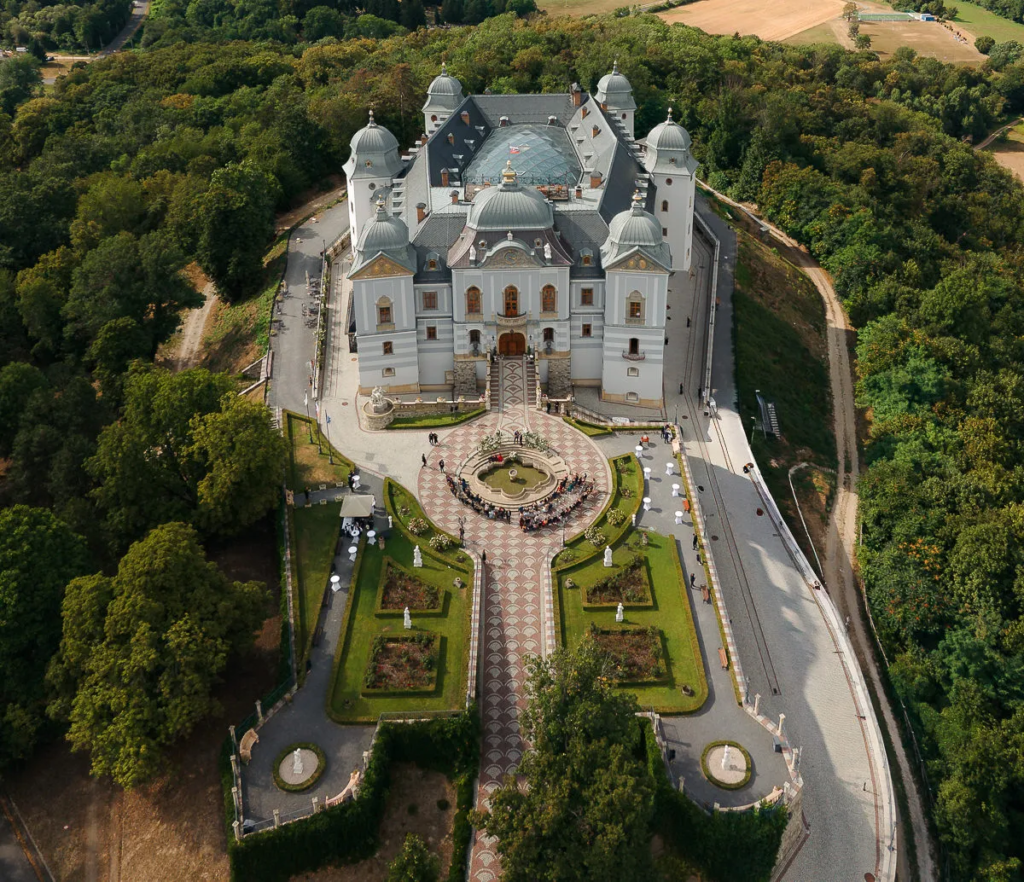
The castle interiors offered a very different visual world from the ceremony grounds: darker, more intimate and richly layered with history. While the bride and groom were photographed there, the guests remained outside with champagne and music, unaware that another reveal was being prepared for them.
The cocktail hour ended with the doors opening to the transformed ballroom. It was the first moment the guests saw the setting in which the remainder of the evening would unfold. The room reveal was not merely the presentation of decoration. It was the opening of the next chapter.
Dinner Conducted Like a Performance
The wedding dinner had been designed with ambition. At its centre was Beef Wellington — one of the least forgiving dishes that can be selected for a large wedding service.
It requires precision in the kitchen, consistency across every plate and complete confidence in timing. The pastry must remain crisp, the meat properly cooked and the service sufficiently coordinated that an entire room receives the dish as it was intended.
There is very little room for hesitation.
Milan had selected the menu and worked closely with the hospitality team before the wedding day. The service was not left to chance. It had been discussed, organized and rehearsed in advance so that the arrival of the main course would feel composed rather than merely efficient.
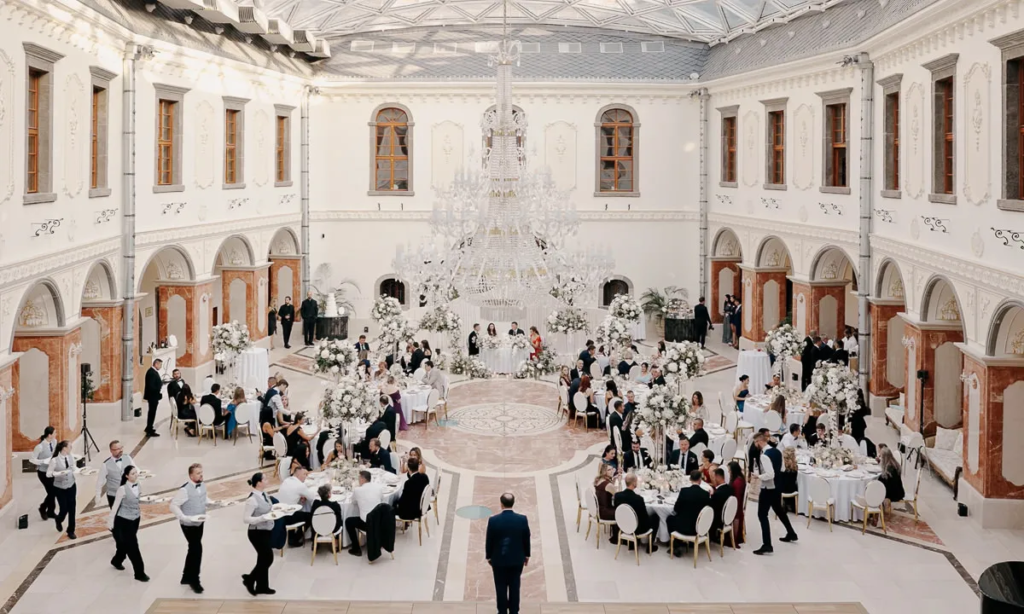
When the first group of waiters entered the ballroom, Milan walked with them. The service team appeared in formal attire and white gloves, moving into the room with a precision more often associated with a ceremonial procession than with a conventional dinner service.
Milan then remained at the centre of the dance floor. From there, he directed the room. He watched the entrances, the spacing between the waiters and the movement of the service across the tables. He appeared less like a manager overseeing a meal and more like a conductor holding an ensemble together. And in a sense, that was precisely what he was doing.
The string orchestra played as the waiters moved through the ballroom. Music, service and timing briefly became one performance. For several minutes, dinner ceased to be a practical interval within the wedding day. It became part of the spectacle.
The kitchen delivered the Wellington beautifully. The service team carried it with confidence. The orchestra gave the room its emotional scale.
What the guests saw was elegance.
What made it possible was rehearsal.
Music with a Purpose
Music had been present from the beginning of the wedding weekend, but never in the same form twice. The harp belonged to the welcome dinner and the faded grandeur of the Baroque hall. The string orchestra was part of the formal dinner, where it added structure and emotion to the room without overwhelming conversation.
Later, the sound would change again. The musical program was never conceived as one long playlist. Each chapter required its own character, volume and emotional purpose. There were moments when music needed to remain almost architectural — supporting the atmosphere without drawing attention to itself.
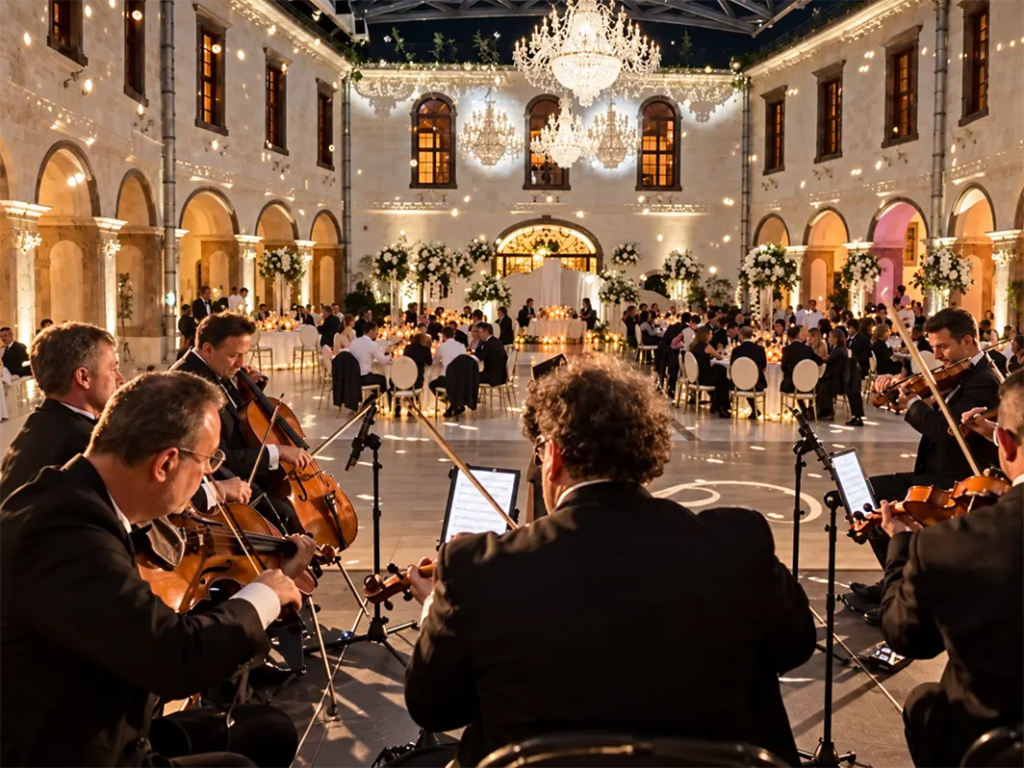
There were moments when it had to announce a transition. And there were moments when it had to take complete possession of the room. The most carefully prepared musical transition of the evening, however, would take place outside the ballroom.
Almost nobody knew it was coming.
The Secret Everyone Remembered
The fireworks had to be completed before ten in the evening in accordance with local regulations. That restriction did not diminish the idea. It sharpened it.
Rather than treating the fireworks as a late-night finale, we built them into the transition between dinner and the evening celebration. The guests were invited outside believing they were simply gathering for the cutting of the wedding cake.
The cake stood on a table placed directly within the castle fountain.
Even before anything else happened, the image was theatrical: the couple surrounded by water, the castle behind them and their guests gathered around the edge of the courtyard.
Then they made the first cut.
Two fountains of sparks rose beside them.
Almost immediately, the sky opened into a six-minute firework display.
The guests had not been told. There had been no announcement preparing them for it and no visible interruption signaling that something larger was about to begin. The surprise worked because it arrived as one uninterrupted sequence.
The cake, the first cut, the sparks, the fireworks and the music were not separate attractions placed beside one another. They had been designed as a single scene.
The sound company had edited the chosen piece of music precisely to the length and rhythm of the display. Every rise, pause and final note had its place. The effect did not come from the fireworks alone.
It came from timing.
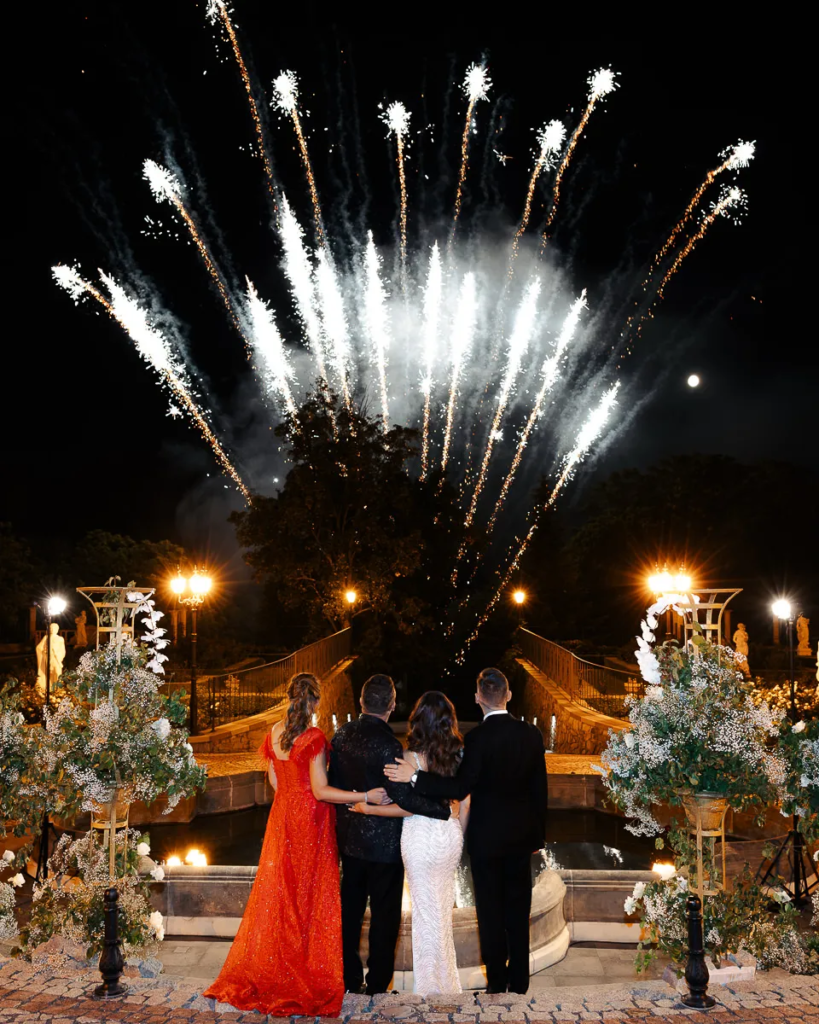
The following morning, when we asked the couple and their guests which moments they remembered most vividly, the cake and fireworks appeared again and again. It was one of the bride’s favorite moments of the entire celebration.
The Night Finds Its Rhythm
When the guests returned inside, the character of the wedding changed once more.
The formal dinner chapter had reached its conclusion. The orchestra gave way to live bands, the volume rose and the ballroom became a dance floor.
International artists, musicians and production teams had been brought together for the evening, each with a distinct role within the progression of the party. The program moved between live performances, DJ sets and saxophone, allowing the energy to build rather than asking the night to peak too early.
A successful wedding party is rarely created by placing several performers on a schedule and hoping that momentum will appear. Energy has to be managed.
A live band can lift the room, but the transition that follows matters just as much. A DJ set may need to hold the dance floor rather than compete with what came before it. A later performance must feel like a renewed arrival, not a repetition of an earlier one.
The official program continued until half past four in the morning. Even then, the celebration did not quite end. The remaining guests moved into the Piper Bar, where the afterparty continued until sunrise.
By that point, the wedding had traveled a considerable distance from the quiet Saturday dinner with twelve guests. The castle had moved through intimacy, ceremony, formal dining, spectacle, and finally complete abandon. That progression was never accidental.
A Softer Final Chapter
A wedding that continues until sunrise deserves a gentle ending.
Tuesday morning was therefore not treated as a hurried departure day. Because the entire castle remained reserved for the wedding party, we could use another part of the property and allow the final hours to unfold at a more forgiving pace.
Breakfast was served in the winery. The room opens onto a terrace and a striking, stylish pavilion of black steel and glass — a quiet architectural contrast to the frescoed halls and historic interiors used during the previous days.
Alongside the traditional breakfast, the castle prepared a generous brunch for guests who emerged somewhat later. There was also a small hangover bar. Yes, it included headache tablets. After a party that had gone into the early morning, refinement and practicality were equally necessary.
Guests returned gradually. Some spoke about the previous evening. Others sat quietly over coffee, reacquainting themselves with daylight. Friends and family who had crossed countries to attend were given one final opportunity to meet before their journeys home began.
Most guests left by mid-afternoon. There was no abrupt closing moment and no sense of being ushered out immediately after breakfast. The celebration simply softened until, little by little, the castle became quiet again.
What the Guests Never Had to See
To the guests, the wedding appeared to move naturally from one setting to another.
A slow Sunday became a formal welcome dinner. A relaxed excursion returned them to a transformed castle. A complex ceremony moved into champagne, portraits and the reveal of the ballroom. Dinner became performance. Cake became fireworks. Fireworks became a party that lasted until sunrise.
Behind that apparent ease was a detailed structure involving the castle, hospitality teams, musicians, technical production, artists, international suppliers and wedding direction.
The principal ballroom was prepared while guests remained elsewhere in the castle. Sound checks and technical work were timed around their experience. An excursion was created partly to protect the production schedule, yet it had to feel worthwhile in its own right.
The outdoor ceremony and its indoor alternative were both held ready until the weather allowed a final decision. A culturally complex sequence of traditions had to be understood, rehearsed and coordinated with sensitivity.
The dinner service was prepared in advance. The fireworks remained secret. The musical program had to move between formality and celebration without losing the space in between.
None of this should have occupied the guests’ attention. That is the invisible architecture of a well-directed wedding. The finest compliment is not that every piece of work was noticed. It is that the guests were free to forget the work entirely.
After the celebration, Urban Events described their experience of working with Castle Weddings:
“Their attention to detail, flawless coordination, and ability to anticipate every aspect of the event created an outstanding experience — not only for the couple and their guests, but also for every supplier involved.”
Having worked alongside many planning teams, they concluded:
“Castle Weddings is simply the benchmark.“
Words from another event professional carry a particular significance. A couple sees the beauty and emotion of the celebration. A supplier also sees the information, preparation, communication and decisions that made it possible. The best events support both.
A Wedding Created by Many Hands
No wedding of this scale belongs to one person or one company. It was created through the trust of the couple, the commitment of the castle team and the work of dozens of professionals who understood that their individual contribution formed part of something larger.
The kitchen had to deliver a demanding menu. The service team had to move as one. The musicians had to understand not only what to play, but why each part of the evening required a different emotional tone. The technical team had to make precision appear effortless.
The performers had to read the room and sustain the celebration long beyond the formal program. The venue had to remain both a historic castle and a functioning private home for an international wedding party.
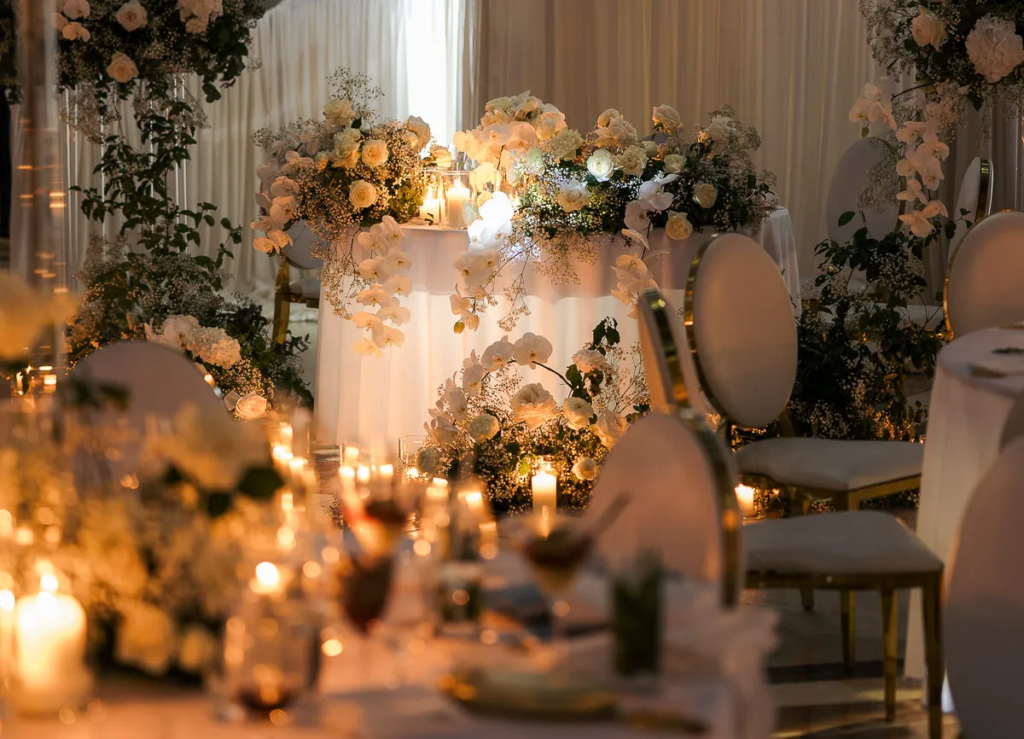
Our role was to hold those worlds together. Wedding direction is not the art of controlling every professional in the room. It is the art of ensuring that each of them receives the clarity, conditions and support required to do their finest work — while protecting the couple and their guests from the complexity behind it.
When that happens, the wedding does not feel managed. It feels inevitable.
The Celebration We Called 108%
In the days that followed, we found ourselves describing this wedding as a celebration delivered at 108%. Not because the preparation had been without pressure. It had not.
The weather changed shortly before the ceremony. The production involved numerous suppliers and several countries. The ceremony contained a demanding sequence of cultural traditions. The dinner relied upon one of the most technically challenging dishes a kitchen can serve at scale. Many of the evening’s finest moments depended upon exact timing.
But almost every ambitious idea became real. The sun returned when it was needed. The traditions came together with dignity. The Wellington left the kitchen beautifully. The waiters entered as rehearsed.
The orchestra filled the ballroom. The surprise remained a surprise. The fireworks began at the first cut of the cake. The dance floor continued until morning. Most importantly, none of the complexity was allowed to diminish the joy of the occasion.
For three days, guests from different countries shared the same castle, the same tables and the same unfolding story.
They dined beneath centuries-old frescoes, drank bubbles above the rooftops, traveled to another castle, watched two cultures meet in one ceremony, followed a maître d’hôtel conducting dinner from the centre of a ballroom and stood beside a fountain as the sky suddenly filled with light.

A castle wedding is not made extraordinary by the castle alone. It is created through hospitality, timing, music, ceremony and the care with which one moment is allowed to lead into the next. For those three days, Galicia Nueva was not merely the setting for a wedding.
It became a complete world of its own.
As you can see, for couples considering a destination wedding in Central Europe, Galicia Nueva offers the rare possibility of bringing accommodation, dining, ceremony and celebration together within one historic estate.