

There are parts of a wedding guests expect to remember. The ceremony. The dress. The first dance. Perhaps a speech that made the room laugh, or one that left several people discreetly searching for a handkerchief.
A wedding food experience is about far more than choosing an impressive menu. It is about hospitality, atmosphere, timing and the memories created around the table.
Food is often treated differently. It is planned carefully, discussed extensively and tasted in advance, yet it is still too easily regarded as something practical — a necessary pause between the meaningful parts of the day.
We have never quite believed that. At a beautiful wedding, food is not an interruption to the experience. It is part of the experience.
It changes the rhythm of the day. It brings people together. It gives them time to settle, to speak, to observe and, finally, to feel that they are no longer simply attending the same event, but sharing it.
That was precisely what happened during our first Brides & Bubbles gathering at the Alchymist Grand Hotel and Spa in Prague.
A seat at the table
The afternoon began with a glass of Alchymist Prosecco in the hotel foyer, followed by a relaxed walk through the rooms in which the celebration unfolded.
There was no rush. No attempt to move guests mechanically from one scheduled item to another. Brides & Bubbles was conceived as an invitation to slow down, look more closely and enjoy the company of those around us.
The meal continued that idea. Our program described it as:
Moments of shared flavours, quiet conversations, and unhurried time together.
It was not decorative language added afterwards. It was the purpose of the table itself.
Once seated, guests were no longer merely observing an event. Conversations began to cross the table. Introductions became stories. The atmosphere grew warmer and more personal with every course.
This is one of the quiet powers of dining: it can transform a room full of individuals into a company.
A menu created for the occasion
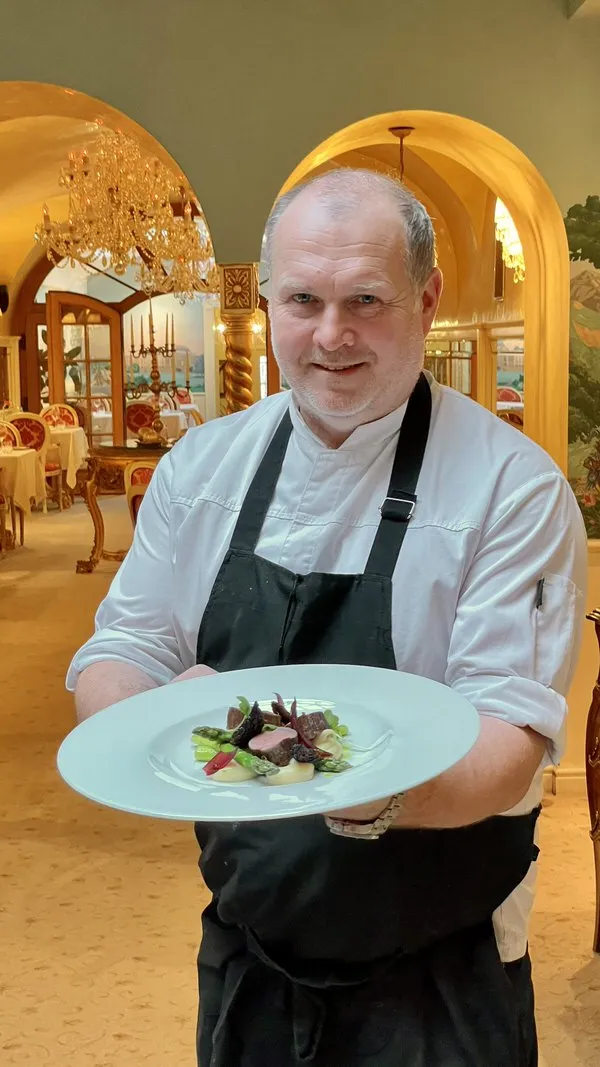
The festive menu was created especially for Brides & Bubbles by Executive Chef Pavel Sapík.
It began with an assortment of delicate chilled canapés, served as guests arrived and discovered the hotel’s wedding spaces.
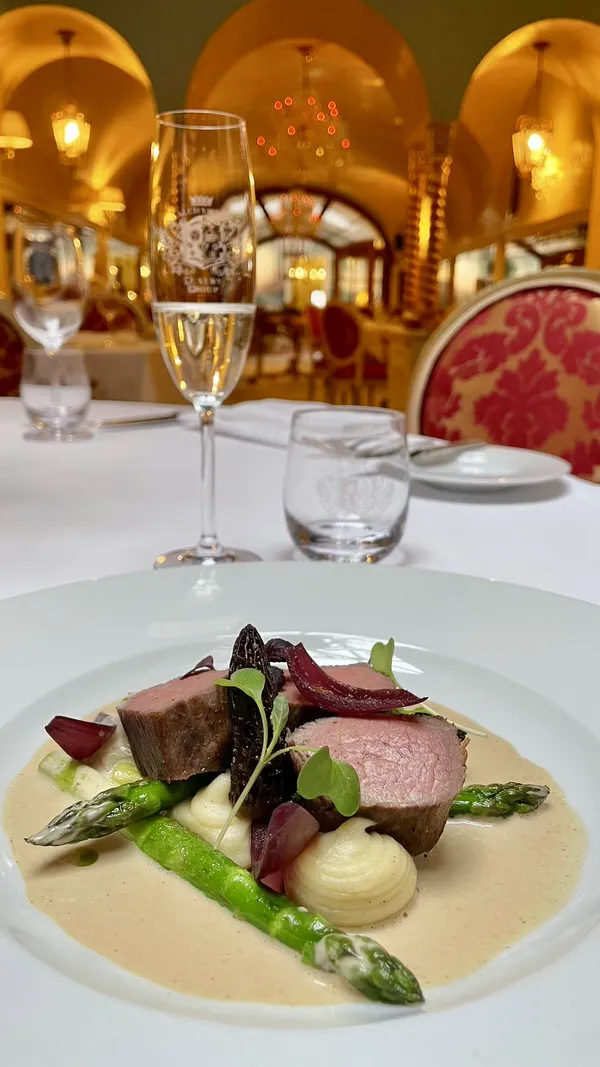
The main course was milk-fed veal with fresh morels à la crème, green asparagus and roasted potato purée, accompanied by a recommended Tuscan red wine, Le Logge di Pietranera 2020.
On paper, the dish sounded classical. On the plate, it was something more.
The veal was tender and beautifully prepared. The morels gave the sauce depth and character, while the asparagus brought the freshness of the season. The potato purée was smooth and comforting, grounding a dish that felt refined without becoming theatrical.
Nothing had been added merely to impress. There was no unnecessary complication and no attempt to make the plate more fashionable than it needed to be. It was confident cooking rooted in flavor, balance and proper hospitality. In other words, rather old-school in the best possible sense.
The non-foodie test
Our Tatiana has never considered herself a gourmand. She enjoys a good meal, certainly, but she is not someone who ordinarily spends the following week analyzing sauces, ingredients and culinary techniques.
And yet, after this menu, we heard her say something we had already begun to hear on rare occasions:
Perhaps she was becoming a gourmand after all.
It was said with a smile. But it was also the finest possible compliment.
Praise from a dedicated food lover is valuable, but excellence is often revealed most clearly when it reaches someone who was not expecting to be impressed. This was not a guest arriving determined to admire fine cuisine. It was a person unexpectedly stopped by it.
And that, perhaps, is what a truly memorable wedding meal should do.
It should not require expertise from the guest. It should simply make them pause, taste again and remember.
More than a menu
A successful wedding menu cannot be judged only by the quality of its ingredients. It must also belong to the occasion.
The food should suit the setting, the season and the people around the table. It should support the pace of the day rather than fight against it. It should feel generous without becoming heavy, refined without creating distance and memorable without demanding attention at the expense of everything else.
At Brides & Bubbles, the menu did exactly that.
The canapés allowed the gathering to begin lightly and naturally. The main course created a true festive moment at the table. The dessert — a candy bar and wedding cake — softened the formality and allowed the afternoon to flow effortlessly into conversation and mingling.
The meal had a beginning, a centre and a gentle finale. It had, in its own way, a dramaturgy.
What guests truly remember
Guests may not recall every ingredient years later. They may forget the precise vintage of the wine or the name of the sauce. But they remember whether dinner felt hurried. They remember whether the food arrived beautifully and at the right moment. They remember whether the table was filled with warmth or waiting.
Most of all, they remember how they felt while they were sitting there. They remember the friend beside them. The unexpected conversation. The glass raised across the table. The moment the entire room seemed to relax.
This is why food is never just food at a wedding. It is hospitality made visible. It is care translated into flavour. It is a reason to pause in the middle of a day that passes much too quickly.
And sometimes, it is the dish that turns even a confirmed non-foodie into a future gourmand.